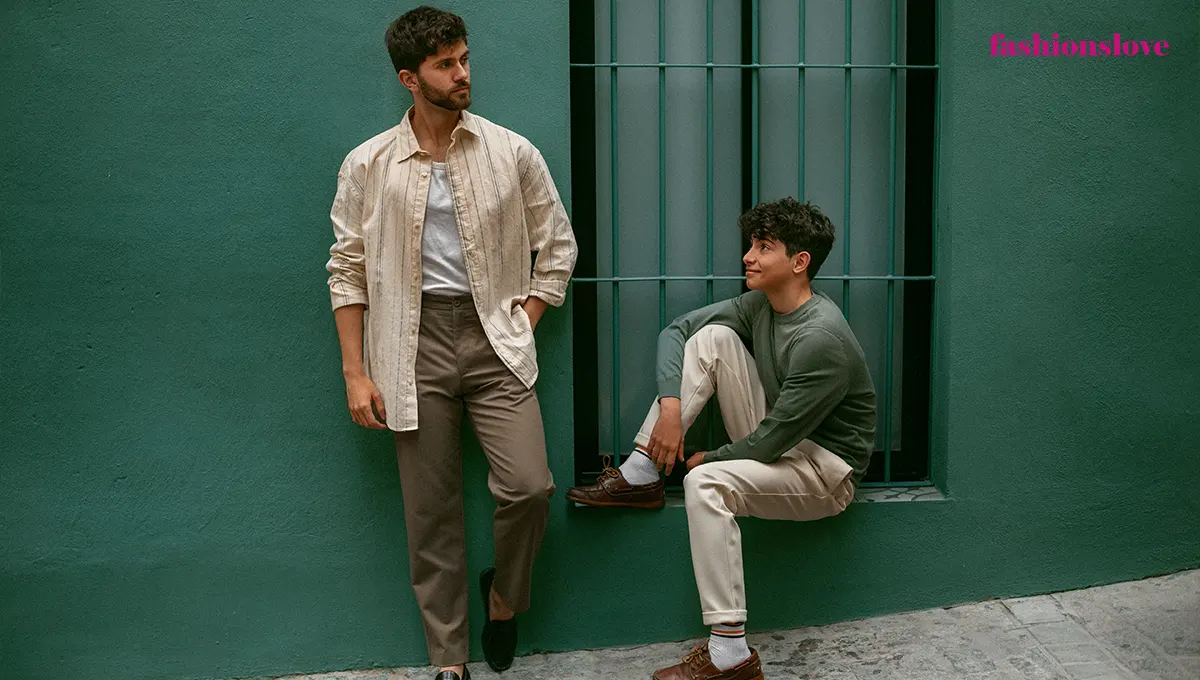
Prom Suits for Guys: 15 Smart Casual Outfits for Men You'll Want to Wear on Repeat
Most guys own a suit for weddings and a T-shirt for everything else. What's missing is the huge middle ground between the outfits you actually need for a Tuesday dinner reservation, a first date, a graduation party, or a work event where "business casual" feels stiff but jeans and sneakers feel wrong.
That middle ground has a name: smart casual.
If you've ever stood in front of your closet wondering what "smart casual" actually means, you're not alone. It's one of the most misunderstood dress codes in men's fashion, mostly because it's not one specific outfit it's a formula. Once you understand the formula, you can build smart casual outfits for men that work for dozens of situations using a surprisingly small number of clothes.
This guide breaks down what smart casual really means, how fit and color actually do the heavy lifting, and 15 genuinely different outfit combinations you can build and rebuild depending on where you're headed.
What Does Smart Casual Mean for Men?
Smart casual is the balance point between relaxed, everyday clothing and structured, formal dressing. It typically combines one or two polished pieces — like a collared shirt, tailored trouser, or blazer — with more relaxed items like chinos, knitwear, or clean sneakers.
There's no single smart casual uniform, and that's the part that trips people up. What counts as smart casual at a Saturday afternoon brunch is different from what counts as smart casual at an evening dinner or a semi-formal work mixer. The occasion, the venue, the time of day, and even the season all shift where the line sits.
That said, a few things generally hold true across situations:
- At least one item should read as "put together" rather than purely athletic or loungewear
- Clothing should fit properly, not oversized or overly tight
- Colors are usually coordinated rather than clashing
- Footwear leans toward clean and structured rather than worn-in or sport-oriented
Casual vs. Smart Casual vs. Business Casual vs. Semi-Formal
These dress codes get used interchangeably, but they're not the same thing. Here's a simple comparison to keep them straight:
|
Dress Code |
Typical Pieces |
Formality Level |
|
Casual |
T-shirts, jeans, sneakers, hoodies |
Lowest |
|
Smart Casual |
Polos, chinos, oxford shirts, loafers, unstructured blazers |
Middle |
|
Business Casual |
Dress shirts, tailored trousers, sport coats, dress shoes |
Higher |
|
Semi-Formal |
Dark suits, dress shirts, ties optional, polished dress shoes |
Highest (below black tie) |
Casual prioritizes comfort above all else. Smart casual adds structure and intention without full tailoring. Business casual leans further toward traditional office dressing, usually requiring a collared shirt and dress trousers at minimum. Semi-formal moves into suit territory, appropriate for evening events, certain weddings, or graduation ceremonies where the invitation specifically calls for it.
If an invitation or workplace specifies a dress code, follow that guidance directly rather than relying on a general definition — dress expectations vary by employer, venue, and region.
The Fit-First Principle
Before getting into specific outfits, it's worth saying this plainly: fit matters more than price. A $40 shirt that fits your shoulders and sits at the right length will look better than a $200 shirt that's swimming on you or straining across the chest. This is the single biggest lever most guys aren't using.
A few fit basics worth checking:
- Shoulders: The seam should sit at the edge of your shoulder, not halfway down your arm or pinching inward
- Sleeve length: Shirt cuffs should hit around your wrist bone; jacket sleeves should show a bit of shirt cuff
- Shirt length: Long enough to stay tucked if tucking, or hit mid-fly if worn untucked
- Trouser break: A slight break at the shoe is the safest bet for smart casual; no break (cropped) reads more modern and slim
- Waist: Trousers should sit at your natural waist without needing a belt cinched to the last hole
- Jacket length: Should cover your seat without extending much further
None of this is about being lean or muscular it's about proportion. Oversized clothing tends to read as sloppy rather than relaxed, and overly tight clothing restricts movement and looks dated fast. The goal is clothing that follows your body's natural lines without clinging to them.
Color Coordination Without Overthinking It
You don't need a color wheel to dress well. Most smart casual outfits work because they lean on neutrals: navy, charcoal, white, cream, beige, olive, and brown
With maybe one accent color in a sweater, jacket, or pair of shoes.
A few simple approaches:
- Tonal dressing: Staying within a similar color family (navy shirt, navy-adjacent trousers) reads clean and intentional
- Contrast dressing: Pairing a light shirt with darker trousers, or vice versa, creates visual separation and looks sharp
- Limit competing colors: Two to three colors total in an outfit is usually the sweet spot beyond that, things start to feel busy
Light blue, white, and cream all pair easily with navy, charcoal, and olive. Burgundy works well as an accent in a sweater or pair of shoes when the rest of the outfit stays neutral. None of these are hard rules, just starting points that make outfit-building faster.
Footwear: What Actually Works With Smart Casual
Footwear is often where an otherwise solid outfit falls apart. Here's a general breakdown of what tends to work.
Loafers are one of the most versatile smart casual shoes — they dress up chinos and jeans alike and work in warm and cool weather.
Derby shoes lean slightly more polished and pair well with tailored trousers or dark denim.
Chelsea boots and chukka boots are strong fall and winter options, especially with wool trousers or layered outfits.
Clean, minimalist sneakers — leather, low-profile, free of heavy branding, can work in more relaxed smart casual settings, particularly weekend or daytime outfits.
Are sneakers smart casual? They can be, but only under specific conditions: the sneaker needs to be clean, structured, and minimal, not a running shoe or heavily branded athletic sneaker.
Sneakers tend to push an outfit toward the casual end of smart casual, so they work better for weekend or daytime settings than for evening dinners or events with a stated dress code.
Visibly worn, scuffed, or dirty shoes undercut an otherwise good outfit faster than almost anything else. If you're only going to invest in one upgrade, quality footwear is a strong place to start.
15 Smart Casual Outfits for Men
These 15 combinations cover different occasions, seasons, and formality levels. None of them require a full wardrobe overhaul — most reuse the same core pieces in different arrangements.
1. Classic Chino-and-Oxford Combo — Navy chinos, a white or light blue oxford button-down, and brown loafers. The closest thing to a default smart casual outfit: clean, repeatable, and right for dinners, work events, or dates. Roll the sleeves for something more relaxed.
2. Dark Jeans with a Structured Shirt — Dark, unwashed denim with a crisp button-down and derby shoes. Dark jeans read more polished than lighter washes. Works well for dates or dinners where jeans are fine but a T-shirt would feel too casual.
3. Unstructured Blazer Over a Tee — A soft-shoulder blazer over a plain crew-neck tee, with chinos or dark jeans and clean sneakers or loafers. The blazer elevates a basic tee-and-jeans combo without needing a collar underneath. Good for evening gatherings where you want polish without a shirt collar.
4. Knit Polo and Tailored Trousers — A knit polo has more texture and structure than a cotton one, so it reads intentional rather than sporty. Pair with tailored trousers and loafers for warm-weather dinners or daytime events.
5. Overshirt Over a Plain Tee — An overshirt (heavier than a dress shirt, lighter than a jacket) worn open over a plain tee, with chinos and chukka boots. Especially strong in fall, adding texture without a full jacket.
6. Cardigan Over a Collared Shirt — A fine-gauge cardigan layered over a button-down, with wool trousers or dark chinos and derby shoes. Feels collegiate and polished — a solid cooler-weather dinner option.
7. Monochromatic Neutral Outfit — Staying within one tonal family, like varying shades of grey or olive, from shirt to trousers. Looks deliberate and modern without complex color matching. Works for dates, dinners, or evening events.
8. Polo and Dark Denim — A fitted polo tucked into dark jeans with clean white or leather sneakers. One of the most versatile weekend combinations — casual enough for daytime, sharp enough for a lunch-to-dinner transition.
9. Sport Coat with Jeans — A structured sport coat over a button-down or knit shirt, with dark, well-fitted jeans and derby shoes or loafers. Can you wear a blazer with jeans? Yes — this is one of the most reliable ways to dress up denim without going full business casual.
10. Summer Linen Shirt and Chinos — A breathable linen-blend shirt, worn untucked or partially tucked, with lightweight chinos and loafers. Built for warm-weather dinners, travel, or daytime events.
11. Layered Sweater Over a Button-Down — A crew-neck sweater over a collared shirt, collar peeking out at the neck, with chinos and Chelsea boots. A reliable fall/winter option for dinners or smart casual offices.
12. All-Neutral Travel Outfit — A soft knit polo or button-down, stretch chinos, and minimalist leather sneakers or loafers. Comfortable through a travel day, still presentable on arrival.
13. Business-Casual Crossover Outfit — A dress shirt (no tie), tailored trousers, and derby shoes, blazer optional. Sits closer to business casual, useful for networking events or stricter offices that still aren't full business formal.
14. Weekend Layered Look — An overshirt or light jacket over a plain tee, with straight-leg jeans and clean sneakers. Relaxed enough for Saturday, structured enough for a casual restaurant.
15. Date-Night Dark Palette — Charcoal or black chinos, a fitted dark button-down or knit polo, and black or dark brown loafers or Chelsea boots. Dark palettes read intentional for evening dates without needing a jacket.
The One-Level-Up Rule
If you're not sure how to build an outfit from scratch, use this shortcut: start with something you'd normally wear casually, then add one polished element.
- Wearing jeans and a T-shirt? Add a blazer.
- Wearing a plain button-down? Swap sneakers for loafers.
- Wearing chinos and a polo? Add a structured shoe instead of a sandal.
You rarely need to change every piece of an outfit to shift its formality.
Usually one deliberate upgrade is enough to move a look from casual into smart casual territory.
The Formality Adjustment
The same core outfit can move up or down in formality depending on a few swappable elements:
- Footwear: Sneakers relax an outfit; loafers or derbies dress it up
- Layering: Adding a blazer or sport coat raises formality; removing it lowers it
- Shirt choice: A T-shirt is casual, a knit polo is smart casual, a button-down is more polished still
- Accessories: A structured watch or leather belt looks more finished than none at all, but skip anything overly formal (like a pocket square) for daytime settings
This is useful because it means you don't need a separate outfit for every possible occasion, you need a core outfit and a few pieces that shift it up or down.
The Rewear Test
Before buying anything new, ask: can this piece work in at least three different outfits? A navy blazer works over a T-shirt, a button-down, or a knit polo. A pair of clean white sneakers works with jeans, chinos, or shorts. If a piece only works for one specific outfit or occasion, it's a weaker investment than something that can be recombined.
The Three-Piece Versatility Principle
A small number of compatible pieces can generate far more outfits than people expect. Three shirts, two pairs of trousers, and two jackets don't just give you seven items. They give you dozens of possible combinations once you start mixing and matching.
This is why building a smart casual wardrobe around versatile, neutral pieces tends to be more efficient than buying occasion-specific outfits that only work once.
If you're starting from scratch or filling in gaps, it can help to explore men's clothing at The Men's Wearhouse, where categories like shirts, chinos, and blazers are organized by piece rather than by full outfit, useful when you're building around versatility rather than buying one complete look.
Seasonal Styling
Spring/Summer: Lean into lightweight shirts, linen or linen-blend fabrics, lightweight chinos, and loafers worn without socks. Neutral, lighter colors (cream, light blue, tan) tend to suit warmer months and photograph well for outdoor events.
Fall/Winter: Knitwear, overshirts, cardigans, and wool trousers come into play. Chelsea boots handle cooler weather better than loafers, and layering (a sweater over a shirt, or a jacket over both) adds both warmth and visual texture.
Occasion-Based Guidance
- Dates: Outfits #2, #7, or #15 — polished enough to show effort, relaxed enough to avoid overdressing for a casual restaurant
- Casual dinners: #1, #6, or #11 strike a comfortable middle ground
- Brunch: #8 or #12 fit the daytime, social nature of brunch
- Smart casual offices: #4 or #13 lean slightly more polished for professional settings
- Networking events: #9 or #13 offer structure without a full suit
- Weekend gatherings: #3, #5, or #14 balance comfort with polish
- Travel: #12 is built for comfort through a travel day while staying presentable
- Graduation-related events: #7, #9, or #13, depending on the formality of the ceremony or reception
Always check whether a specific occasion has a stated dress code before defaulting to a general smart casual formula — invitations, workplaces, and venues vary, and stated guidance takes priority over generic advice.
Building a Versatile Smart Casual Wardrobe
Rather than buying outfit by outfit, it helps to think in categories:
- Two to three neutral chinos (navy, olive, tan)
- One or two pairs of dark, well-fitted jeans
- A few Oxford or button-down shirts in white, light blue, and one pattern
- A couple of polos, including at least one knit polo
- One or two knitwear pieces (sweater or cardigan)
- An unstructured blazer in navy or grey
- A casual jacket or overshirt for layering
- Loafers, a pair of derbies, and either Chelsea or chukka boots
- Clean, minimal sneakers for more relaxed settings
- Simple accessories: a leather belt, a plain watch
You don't need dozens of items, a tightly curated set of compatible pieces in coordinating colors will outperform a large wardrobe of mismatched, occasion-specific clothing.
👉 When you're ready to build out these categories, you can shop smart casual pieces at The Men's Wearhouse and focus on filling actual gaps rather than duplicating what you already own.
Common Smart Casual Mistakes to Avoid
- Too baggy or too tight: Oversized clothing reads as sloppy rather than relaxed; overly fitted clothing restricts movement and dates fast. Aim for pieces that follow your body's natural lines.
- Too many patterns: Stick to one patterned piece per outfit — several competing patterns create visual noise.
- Worn-out sneakers: Scuffed or visibly aged shoes undercut an otherwise solid outfit.
- Treating smart casual as business formal: A full suit and tie is overdressed for most smart casual settings.
- Going too casual: Gym clothes, graphic tees, and flip-flops fall outside smart casual, regardless of the rest of the outfit.
- Ignoring footwear: Shoes are often the first thing people notice — don't treat them as an afterthought.
- Overly formal accessories: Cufflinks or pocket squares can look out of place in daytime or relaxed settings.
- Mixing formality levels: A tuxedo shirt with jeans, or gym shorts with a blazer, reads as confused rather than intentional.
- Ignoring the venue: An outfit built for a rooftop bar might not suit a formal restaurant, and vice versa — context matters as much as the clothes themselves.
Frequently Asked Questions
-
What are smart casual outfits for men?
Smart casual outfits combine relaxed, comfortable pieces with at least one polished element, such as a collared shirt, tailored trouser, or structured shoe. They sit between casual and business casual dress codes. -
What should men wear for smart casual?
A common formula is a collared shirt or knit polo, chinos or dark jeans, and loafers or derby shoes, optionally layered with a blazer, cardigan, or overshirt depending on the season and occasion. -
Can men wear jeans for smart casual?
Yes, as long as the jeans are dark, unwashed or lightly washed, and free of rips or heavy distressing. Pairing jeans with a structured shirt, blazer, or dress shoe helps balance the casual denim. -
Are sneakers smart casual for men?
Clean, minimal, leather sneakers can work in more relaxed smart casual settings, especially during the day or on weekends. Athletic or heavily branded sneakers generally push an outfit too casual for smart casual dress codes. -
Can you wear a blazer with jeans?
Yes. A blazer paired with dark, well-fitted jeans is one of the most reliable ways to dress up denim without moving into full business casual territory. -
What shoes are best for smart casual outfits?
Loafers, derby shoes, Chelsea boots, and chukka boots are all reliable smart casual options. Clean minimalist sneakers can work for more relaxed settings, while formal dress shoes tend to look overdressed unless the occasion calls for it. -
What is the difference between smart casual and business casual?
Smart casual allows more relaxed pieces like polos, chinos, and loafers, while business casual typically requires a collared dress shirt, tailored trousers, and dress shoes at minimum, with less room for casual layers like T-shirts or sneakers. -
What should men wear for a smart casual dinner?
A button-down shirt or knit polo, tailored trousers or dark jeans, and loafers or derby shoes generally work well for a smart casual dinner. A blazer can be added if the restaurant or occasion calls for a bit more polish.
"Smart casual isn't a single outfit you memorize, it's a formula you adjust based on where you're going, what the season looks like, and how much polish the moment calls for. Once you have a handful of versatile pieces that coordinate with each other, you can build dozens of outfits from a fairly small wardrobe, whether you're dressing for a first date, a Sunday brunch, or an evening you didn't fully plan for.